If you’ve ever stared at your online store’s dashboard and wondered why the traffic feels as flat as a Brisbane summer afternoon, you’re not alone – that’s why we’ve gathered the best ecommerce SEO tips to get you noticed.
Imagine a customer searching for a handmade soy candle from a local Brisbane shop. They type ‘soy candle Brisbane’ and, instead of landing on your site, they’re whisked away to a competitor’s page. It hurts, right? That’s the exact moment solid SEO can turn the tide.
What we’ve seen work best for small businesses in Queensland is to start with the basics: tidy URLs, lightning-fast page loads, and mobile-friendly layouts. When Google crawlers glide through your site without tripping over broken links, they reward you with higher rankings.
Next, think about the words your customers actually use. Instead of stuffing every page with generic phrases, weave natural, long-tail keywords like ‘artisan soy candles Brisbane’ into product titles and meta descriptions. It feels less spammy and more like a conversation you’d have over an arvo coffee.
Don’t forget about images. A crisp photo of your product, named with the keyword (for example, soy‑candle‑brisbane.jpg), and an alt tag that reads ‘hand‑poured soy candle made in Brisbane’ give search engines extra clues and improve accessibility. Following these ecommerce SEO tips for image optimisation can make a big difference.
Local citations are another hidden gem. Listing your business on Google My Business, TrueLocal, and industry directories signals to Google that you’re a legitimate Aussie retailer. It also adds valuable backlinks without costing a cent. These ecommerce SEO tips also apply to your local listings, ensuring consistency across platforms.
Lastly, keep an eye on performance. Tools like Google Search Console let you spot crawl errors, while the free PageSpeed Insights report shows you exactly where you can shave seconds off load time. Small tweaks like compressing images or leveraging browser caching give you a speed boost and keep shoppers happy.
So, what’s the next step? Pick one of these tips, implement it this week, and watch your organic traffic start to climb. Remember, SEO isn’t a one‑off sprint; it’s a steady walk down the beach, one foot in front of the other.
🐣 The Chick
If you’re a Brisbane‑based small business, our ecommerce SEO tips show how simple URL tweaks, lightning‑fast images and local citations can start pulling real shoppers today.
Implement one action this week, watch your traffic climb, and remember SEO is a steady walk on the beach, not a sprint for you.
Alright, imagine you’re scrolling through your store’s dashboard on a lazy Brisbane arvo and wonder why nobody’s finding your handmade soy candles. The missing piece? The right keywords.
Keyword research is the compass that points Google’s crawlers toward your product. Without it, you’re basically shouting into the outback with no one listening.
Step one is to get inside your customer’s head. Think about the exact phrase they’d type when they’re craving that candle – maybe “artisan soy candle Brisbane” or “hand‑poured soy candle Northside QLD.”
Grab a free tool like Google Keyword Planner or the keyword ideas tab in Google Search Console. Type in a broad term like “soy candle” and watch the suggestions roll out.
You’ll see three key metrics: search volume, competition, and intent. For a small shop, a modest volume with low competition is gold. High‑volume terms are tempting but usually dominated by big brands.
Next, filter for long‑tail gems. Those four‑word phrases might only pull 50 searches a month, but they’re ultra‑specific – the people behind them are ready to buy.
Create a simple spreadsheet. Column A: keyword phrase. Column B: monthly searches. Column C: competition level (high, medium, low). Column D: notes on where it fits – product title, blog post, FAQ.
When you map keywords to pages, stay natural. Instead of stuffing “soy candle Brisbane” into every meta tag, weave it into a product title like “Artisan Hand‑Poured Soy Candle – Brisbane Made.”
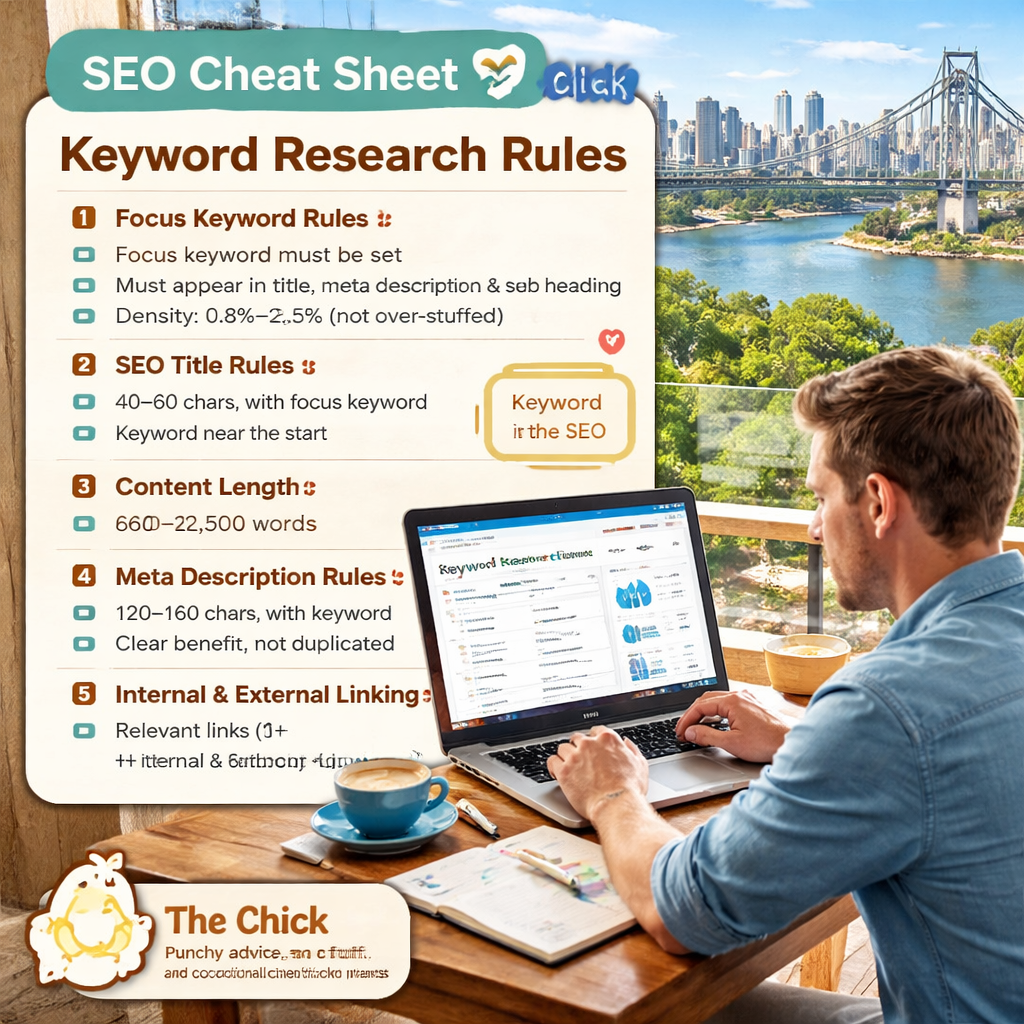
Don’t forget the hidden treasure chest: “People also ask” on Google SERPs. Those question snippets reveal the exact phrasing your audience uses. Turn them into blog topics or FAQ entries.
A quick sanity check – run your shortlist through a tool like Ubersuggest to see how hard it would be to rank. If the SEO difficulty score is above 70, consider a related, easier phrase.
Local SEO matters too. Add geo‑modifiers like “Brisbane”, “Queensland”, or neighbourhood names. Even if you sell nationwide, a local spin can push you into the coveted “map pack.”
Once you’ve locked down 10‑15 core keywords, sprinkle them across core ecommerce elements: product titles, meta descriptions, alt text for images, and even the URL slug.
Pro tip: keep a keyword calendar. Every month, pick one or two new phrases to optimise a product page or write a short blog. Consistent micro‑updates beat a massive overhaul once a year.
Finally, monitor performance. In Google Search Console, check the “Performance” report for impressions and clicks on your chosen terms. If a keyword isn’t moving, tweak the copy or target a sibling phrase.
And that’s the groundwork for solid ecommerce SEO tips – a research routine that feels more like a coffee chat than a data dump. Give it a go this week, and you’ll start seeing those search lights flicker on.
Alright, you’ve got the right keywords in place – now it’s time to make your product pages do the heavy lifting. Think of each product page as a tiny sales rep that never sleeps, but only if you give it the right script.
First thing’s first: the title tag. It should read like a headline you’d shout across a market stall, but still include your key phrase. For a handmade soy candle, something like “Hand‑Poured Soy Candle – Brisbane | Free Website Chick” works wonders. Keep it under 60 characters so Google doesn’t chop it off.
Google shows about 155 characters in the snippet. Use that space to answer the shopper’s hidden question: “Will this scent fill my living room?” Add a call‑to‑action – “Buy now for free shipping in Queensland”.
Need a template? product page SEO best practices walk you through auto‑generating titles and meta tags while still letting you tweak the copy.
Short, readable, and keyword‑rich URLs win both clicks and crawlers. Instead of /product?id=12345, use /hand‑poured-soy-candle-brisbane. All lower‑case, hyphens, no stop‑words.
Use an H1 for the product name – that’s the main promise. Follow with H2s for “Features”, “Specifications”, “Customer Reviews”, and “FAQs”. It’s like a map for both humans and bots.
Speaking of FAQs, the Australian e‑commerce SEO checklist recommends adding a few question‑answer blocks on the page. Not only do they boost relevance, they can appear as rich results in Google.
Don’t just list specs; paint a picture. “Imagine the warm glow of this soy candle on a rainy Brisbane evening, the scent of vanilla drifting through your lounge.” Use natural language and sprinkle in secondary keywords like “eco‑friendly candle Brisbane”.
Remember to keep it scannable: bullet points for key benefits, bold for the most persuasive line, and short paragraphs that feel like a chat over coffee.
Rename files to match the product: hand‑poured‑soy‑candle‑brisbane.jpg. Alt text should describe the scene and include the keyword, e.g., “hand‑poured soy candle with vanilla scent, made in Brisbane”. Compress images to under 100 KB and serve WebP where possible to shave milliseconds off load time.
Fast pages convert better. A 100 ms delay can cost you 1 % in sales, according to Amazon research – that’s money you could be making on each candle.
Add Product schema: name, price, availability, SKU, and review rating. When Google can parse the data, you stand a chance of getting rich snippets – the little star rating and price that make you look trustworthy at a glance.
Don’t forget the breadcrumb schema too; it shows the hierarchy (Home > Candles > Soy Candles) and can appear in search results.
Every product page should link back to its category and to related items. For a candle, you might suggest “Match it with our handcrafted candle holder”. This not only helps users discover more, it spreads link equity throughout your store.
Here’s a quick checklist you can copy‑paste into your workflow:
In our experience working with Brisbane‑based retailers, a tidy product page can lift organic traffic by 30 % within a month. That’s the kind of boost that turns a hobby into a thriving business.
And if you’re wondering where to start, a good first step is to audit one of your top‑selling items using the checklist above. Spot the missing meta tags, add schema, and watch the rankings creep up.
For a deeper dive into how layout and design affect conversions, check out our guide on Ecommerce Website Design for Australian Small Businesses. It walks you through colour, button placement, and mobile‑first tricks that pair perfectly with these SEO tweaks.
That’s it – optimise, test, repeat. Your product pages are now primed to attract the right shoppers, answer their questions, and close the sale without you having to chase them down.
🐣 The Chick
Now that your product pages are speaking the right language, it’s time to make sure Google can actually reach them without tripping over a broken fence.
Technical SEO might sound nerdy, but think of it as the foundation of a solid house – if the frame is shaky, no amount of fancy paint will keep it standing.
In this step we’ll walk through the basics that any Brisbane‑based small business can tackle this week, so you can start seeing the traffic lift that our ecommerce SEO tips promise.
First, grab Google Search Console and verify your domain. It’s free, it tells you exactly which pages Google can see, and it flags crawl errors faster than a barista spotting a burnt latte.
Next, generate an XML sitemap – most platforms do this automatically, but double‑check that every live product, collection and blog post appears. Submit the sitemap in Search Console and also in Bing Webmaster Tools if you want that extra visibility.
Imagine you run a small boutique selling hand‑poured soy candles in Fortitude Valley. If your sitemap misses the new “Limited‑Edition Summer” candle, Google won’t know it exists, and none of those summer shoppers will find it.
Don’t forget the robots.txt file. It should allow Googlebot to crawl your /products/ and /collections/ folders, but block any admin or staging URLs that could cause duplicate‑content headaches.
Page speed isn’t just a nice‑to‑have; it’s a ranking factor and a conversion driver. Research shows a 100 ms delay can shave about 1 % off your sales – that’s money slipping through the cracks on every checkout.
Run a PageSpeed Insights test. Look for three core metrics: Largest Contentful Paint (LCP) under 2.5 seconds, First Input Delay (FID) under 100 ms, and Cumulative Layout Shift (CLS) below 0.1. If you’re off‑track, start with the low‑hanging fruit:
Need a quick performance boost without becoming a dev‑guru? The Nostra AI Edge Delivery Engine can shave seconds off load time with a few clicks read the mobile‑first speed guide. It’s a solid option for busy entrepreneurs who’d rather spend time creating candles than tweaking code.
Google now indexes the mobile version of every site first. If your store looks like a desktop‑only spreadsheet on a phone, you’ll see rankings tumble.
Choose a responsive theme that automatically reshapes columns, hides unnecessary sidebars, and enlarges tap targets. Test on real devices – ask a mate with an iPhone and another with a Samsung to navigate your checkout. If they struggle to click ‘Add to Cart’, so will your customers.
Keep content skimmable: short paragraphs, bullet points, and clear headings. Voice‑search is also rising; think about how someone might ask, “Where can I buy a vanilla soy candle in Brisbane?” – a concise, mobile‑friendly answer can land you a featured snippet.
HTTPS isn’t optional any more; it’s a trust signal. Browsers label non‑HTTPS sites as “Not Secure”, and Google demotes them in rankings. If you’re still on an outdated SSL cert, renew it today – most hosts, including our managed hosting, handle this automatically.
Schema markup helps Google understand your product details without guessing. Add Product schema with name, price, availability and review rating. When Google can pull that data, you might earn a rich snippet – the little star rating that makes shoppers stop scrolling.
Breadcrumb schema is another quick win. It tells both users and crawlers where a page sits in your hierarchy, and it can appear directly in the SERP, nudging click‑through rates up.
Take one bullet each day, and you’ll see your store become a well‑behaved guest in Google’s eyes. That’s the magic behind the ecommerce SEO tips we’ve been sharing – technical tweaks that let the great copy and beautiful products you’ve already crafted finally get the attention they deserve.
🐣 The Chick
When you’ve cleaned up your site’s code and polished your product pages, the next big lift in our ecommerce SEO tips is earning quality backlinks. Think of a backlink as a vote of confidence from another website – the more trustworthy the voter, the louder Google hears you.
But how do you get those votes without spending a fortune on ads or begging strangers on the street? Below is a step‑by‑step guide that any Brisbane‑based small business can start this week.
Search engines look at two things: relevance and authority. A link from a local council site or a well‑known industry blog tells Google “this store is legit.” A dozen links from low‑value directories barely move the needle.
In fact, BDC points out that “the relevance of the images and videos on your pages, credible sites linking to your content… are factors that influence the search results” BDC’s guide to ranking higher. So focus on relevance first.
Start with something you already own that people love: a how‑to guide, a local market report, or a behind‑the‑scenes video of candle‑making. These assets become the magnet for natural links.
Actionable checklist:
Think about the businesses you already chat with over an arvo coffee – the neighbourhood bakery, the co‑working space, the community centre. Offer them a free guest post or a resource they can link to.
Example: A Brisbane café featured your candle in a “Local Gifts” blog post. In return they get a backlink and you get exposure to their regulars.
When you email, keep it short, mention the mutual benefit, and include a ready‑made headline. Something like, “Can I share a quick guide on sustainable gift ideas for your readers?” works wonders.
Australia’s local chambers of commerce, tourism boards, and niche trade associations often have member directories. Getting listed there not only boosts local SEO but also provides a high‑authority link.
Don Hesh’s case studies show a small Sydney café lifted traffic by 150% after local SEO and directory optimisation Australian brand case studies. The same principle applies to Brisbane retailers.
Instead of generic guest posts, pitch a “local spotlight” piece that ties directly to your niche. For a candle maker, a story about “How Brisbane’s rainy evenings inspire our winter scents” fits perfectly on a lifestyle blog.
Make sure the article includes one contextual link back to your product page or guide. Use a natural anchor like “hand‑poured soy candles made in Brisbane”.
Set up a simple spreadsheet: column A for target site, B for outreach date, C for response, D for link status, E for traffic lift. Review the data every two weeks and double‑down on tactics that delivered at least a 10 % rise in referral sessions.
Remember, link building is a marathon, not a sprint. A handful of high‑quality links each month will compound over time.
| Link type | Typical domain authority | How to acquire |
|---|---|---|
| Local council or chamber | 80‑90 | Submit business profile or offer a community resource |
| Industry blog / news site | 60‑75 | Pitch a local‑angle guest post with data |
| Partner’s website | 50‑70 | Swap a resource link or co‑create a guide |
Putting it all together: pick one asset, reach out to three local partners this week, and log the results. By the end of the month you’ll have at least two new high‑quality backlinks, a boost in authority, and a measurable uptick in organic traffic.
That’s the practical side of our ecommerce SEO tips for building backlinks – no gimmicks, just real‑world steps you can act on right now.
🐣 The Chick
Picture this: a local shopper in Fortitude Valley types ‘hand‑poured soy candle Brisbane’ and the first result is your store, complete with a five‑star rating. That feeling of being seen in your own neighbourhood is the sweet spot of local SEO and customer reviews.
Google treats a nearby business a bit like a neighbour – it wants to recommend you first if you’re relevant. A study from Ven shows that Aussie SMEs who nail local citations can see up to a 30 % lift in organic traffic within a few months small business SEO strategies. The boost comes from two places: the map pack and the review carousel.
So, what should you focus on first?
It sounds simple, but a half‑filled profile is like a shop window with the curtains drawn. Make sure you:
After you hit “verify”, Google will start showing your store in local pack results when someone searches for relevant terms.
And don’t forget the power of the Q&A section – answer common queries like “Do you offer free shipping in Queensland?” directly on the profile.
Reviews are the social proof that convinces a browser to become a buyer. According to WebSell, 93 % of shoppers read reviews before purchasing how to get customer reviews. The good news? You can harvest them without spending a cent.
Here’s a quick, repeatable workflow:
If a customer leaves a negative comment, respond publicly, apologise and invite them to discuss the issue offline. This shows you care and can actually improve your overall rating.
Want to see reviews everywhere? Add a widget to your product pages, your checkout thank‑you page and even your Instagram stories. Consistency builds trust.
Beyond Google, directories like TrueLocal, Yellow Pages and industry‑specific sites act as extra votes for your location. The key is consistency – the same NAP across every listing.
Pick three to five high‑authority local sites and fill them out this week. Once they’re live, ping them to confirm the listing is active. You’ll often see a small but steady bump in rankings within two weeks.
Adding Review schema to your product pages tells search engines that you have genuine user feedback. It’s a tiny snippet of code, but the payoff can be a star rating next to your listing in SERPs – a visual cue that lifts click‑through rates.
Most ecommerce platforms let you drop a JSON‑LD block in the page header. If you’re not comfortable coding, a developer can add it for you in under an hour.
Pick one item from the list each day. By the end of the week you’ll have a stronger local presence, fresh user‑generated content, and a solid foundation for the next round of ecommerce SEO tips.
Remember, local SEO isn’t a one‑off task; it’s an ongoing conversation with your community. Keep listening, keep updating, and watch those Brisbane neighbours start clicking “Add to Cart”.
🐣 The Chick
We’ve walked through a handful of ecommerce SEO tips that any Brisbane‑based small business can start using today. From polishing product pages to earning genuine reviews, each step builds a little more trust in Google’s eyes.
So, what’s the next move? Pick one item from the checklist you haven’t tried yet – maybe adding Review schema or sending a friendly post‑purchase email – and set a timer for 30 minutes this afternoon. You’ll see a tiny lift in clicks, and that momentum fuels the next tweak.
SEO isn’t a one‑off sprint; it’s a regular walk along the beach. Schedule a quick weekly audit, update one meta tag, respond to a new review, and you’ll keep the signal strong without feeling overwhelmed.
Remember, the goal isn’t perfection, it’s progress. Each small win adds up, turning your online store from a quiet corner into a bustling local favourite. Give yourself a simple habit – review your analytics every Friday and note one thing you can improve.
Need a hand turning those ideas into reality? We’re always happy to chat about how Free Website Chick can take the technical heavy lifting off your plate, so you can focus on making candles, crafts, or whatever you love.
🐣 The Chick
Start with the basics: clean URLs, fast page loads, and mobile‑friendly layouts. Then weave local, long‑tail keywords like “hand‑poured soy candles Brisbane” into your titles, meta descriptions, and image alt text. Add structured data – a simple product schema can turn a plain listing into a rich snippet. Finally, claim your Google Business Profile and keep NAP details consistent across directories. Those bite‑size ecommerce SEO tips give Google a clear picture of who you are and what you sell.
Think of an audit like a weekly coffee catch‑up – short, regular, and useful. Set aside 20‑30 minutes every Friday to scan for broken links, missing alt tags, or stale meta descriptions. If you notice a dip in clicks, dive deeper that week and tweak the title or add a new FAQ block. Consistency beats a massive overhaul; a little habit keeps your pages humming and your rankings steady.
Yes, schema is the silent salesperson that talks to Google on your behalf. For ecommerce, start with Product schema (price, availability, SKU) and Review schema so star ratings can appear in search results. If you run a blog that educates shoppers, add Article schema to boost the chance of a featured snippet. Implementing a few JSON‑LD blocks takes minutes, but the click‑through lift can be noticeable within a month.
Absolutely – think of citations as neighbourhood references. When Google sees your business listed on trusted sites like TrueLocal, Yellow Pages, or your local chamber of commerce, it treats you as a genuine Brisbane retailer. Aim for at least three high‑authority citations with identical NAP info. The signal is subtle but cumulative; many small shops report a 10‑15 % traffic bump after cleaning up their local listings.
Timing is everything. Send a friendly thank‑you email 7‑10 days after purchase, include a one‑click button that lands straight on your Google review page, and keep the copy casual – “Hey, hope you’re loving your new candle. Would you mind sharing a quick thought?” Personalise with their first name and a tiny incentive like a 5 % off coupon for the next order. Authentic, low‑pressure asks generate honest feedback.
Look at a handful of core metrics in Google Search Console: impressions, average position, and click‑through rate for your target keywords. Pair that with Google Analytics – check organic sessions, bounce rate, and conversion rate on product pages you’ve optimised. Set a baseline before you implement a change, then revisit after two weeks. If you see a steady rise in impressions and a modest lift in conversions, you’ve hit the sweet spot.